
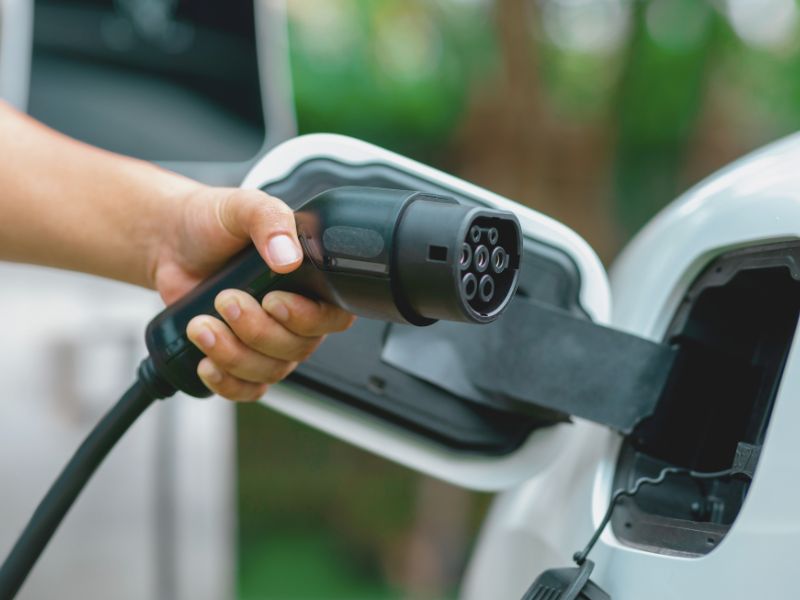
In June of 2025, AIM SC Contracting developed a conceptual EV charging infrastructure proposal for a commercial property seeking to support electric vehicle adoption and future transportation electrification initiatives. The project included budgeting support, electrical infrastructure planning, and installation recommendations for multiple commercial-grade charging stations.
Because the project was in the preliminary planning stage, final charger locations and electrical power feed sources had not yet been determined. AIM SC Contracting provided installation planning based on assumed feeder distances and anticipated electrical requirements to support future project execution.
Client Goals
The client sought to:
- Implement scalable EV charging infrastructure
- Support employees, visitors, and fleet charging operations
- Prepare the facility for increasing EV demand
- Establish reliable electrical distribution for high-load charging systems
- Develop preliminary infrastructure planning for future construction phases
Proposed Charging Equipment
Express Plus Fast Charging Unit
A high-capacity commercial charging station designed for rapid EV charging applications.
Proposed Specifications
- Continuous Load: 300 Amp
- Voltage: 277/480 Volt
- Estimated Feeder Distance: 100 Feet
- Breaker Type: GFCI / Molded Case Circuit Breaker
- Proposed Location: To Be Determined
Applications
- Commercial fleet charging
- High-traffic customer parking
- Rapid charging support
- Future scalable EV infrastructure
CPF50 Charging Units (2 Units)
Commercial charging stations intended for standard EV charging operations.
Proposed Specifications
- Single Charging Head
- Continuous Load: 60 Amp
- Voltage: 120/240 Volt Single Phase
- Estimated Feeder Distance: 50 Feet
- Breaker Type: GFCI / Molded Case Circuit Breaker
- Proposed Location: To Be Determined
Applications
- Employee parking
- Visitor charging stations
- Long-duration parking environments
- Cost-effective EV charging deployment
CPE250 Dual Head Charging Unit
A dual-head EV charging station capable of charging two vehicles simultaneously.
Proposed Specifications
- Dual Charging Heads
- Continuous Load: 120 Amp
- Voltage: 277/480 Volt
- Estimated Feeder Distance: 60 Feet
- Breaker Type: GFCI / Molded Case Circuit Breaker
- Proposed Location: To Be Determined
Applications
- Multi-user commercial charging
- Increased charging accessibility
- Reduced infrastructure footprint
- High-efficiency commercial operations
Included Installation Scope
AIM SC Contracting proposed a turnkey installation package including:
- Electrical conduit piping
- Power cables and wiring
- Copper conductors
- GFCI and molded case circuit breakers
- Foundation mounting pedestals
- Bollard protection systems
- Charging station signage and striping
- Charger programming and commissioning
- Electrical insulation testing
- Leakage certification testing
- Labor and materials
- Permit coordination and processing
- Trenching operations
- Excavation work
- Backfill and site restoration
These items were to be evaluated separately once final charger locations and site conditions were confirmed.
Engineering & Site Considerations
Due to the conceptual nature of the project, the final engineering design was pending confirmation of:
- Charger placement locations
- Utility tie-in points
- Electrical load calculations
- Existing infrastructure capacity
- Site accessibility
- Local permitting requirements
- Civil and trenching requirements
AIM SC Contracting planned to perform additional field verification and coordination during the final design phase to optimize installation efficiency and support long-term operational reliability.
Project Value
This EV charging infrastructure initiative positioned the client to:
- Support long-term sustainability goals
- Increase property functionality and value
- Improve customer and employee convenience
- Prepare for future EV adoption trends
- Enhance commercial property competitiveness
- Establish scalable electrical infrastructure for future expansion